
Arbitration Reigns Supreme

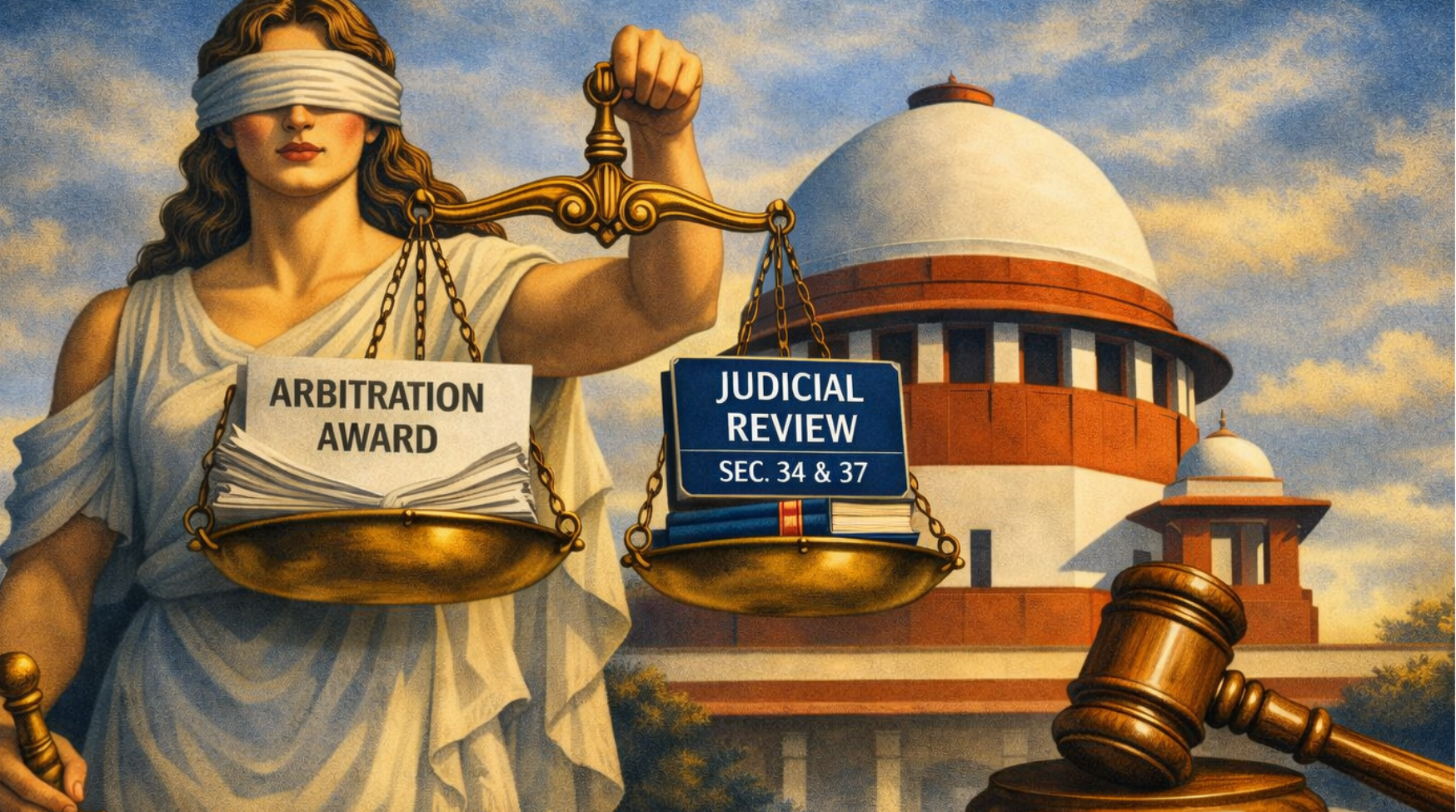
Respect arbitral Autonomy—courts will step in only when restraint gives way to clear illegality.
Supreme Court Enforces Judicial Restraint
The Supreme Court of India’s judgment delivered on 26 May 2026 in Bhupesh Bhayana & Anr. vs. Kunal Seth & Anr. carries significant implications for business owners who rely on contracts and arbitration to safeguard their interests.
The dispute stemmed from a reconstruction agreement entered in 2010, where the builder failed to complete the project and defaulted on payments. The contract contained penalty clauses, including forfeiture of earnest money and daily fines for delay, but ambiguity in timelines and insufficient proof of damages complicated enforcement.
The arbitrator initially awarded heavy penalties to the owners, yet subsequent judicial scrutiny reduced or denied parts of the claim, highlighting that arbitration awards are not immune from correction.
Ultimately, the Supreme Court stepped in to balance equities, awarding the owners a reduced penalty of ₹6.3 lakh while confirming a refund of ₹81.92 lakh to the builder, invoking its constitutional powers to modify the award rather than prolong litigation.
For business owners, the ruling underscores the importance of drafting contracts with precision, maintaining documentary evidence of losses, and recognizing that courts will intervene to ensure fairness in arbitration outcomes.
It also demonstrates that while arbitration is designed to provide speedy resolution, judicial oversight remains a safeguard against errors, and pragmatic closure is often preferred over endless disputes. This judgment serves as a reminder that contracts are the backbone of business dealings, and careful attention to detail in drafting and execution can prevent costly and protracted conflicts.

CEO & Founder – Justicum Chambers A trusted partner in business strategy, law, and compliance—empowering entrepreneurs with strategic legal insights that strengthen resilience, safeguard growth, and drive sustainable success.
View All Articles